Seeking convergence on agroecology- a conference impression

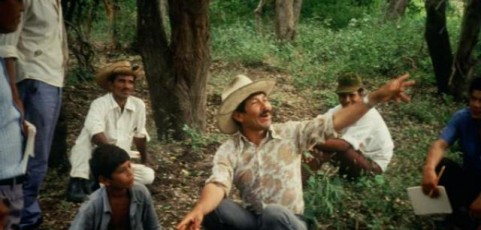
Content Whoever thought that agroecology is only gaining momentum as an agricultural practice, science and movement in Latin America, is wrong. A two day conference in June 2013 clearly depicted the richness of agroecology in Europe- as well as the challenges and opportunities.

Initiated by scientific network ENSSER, the meeting convened politicians, activists, officials, seed breeders, a small number of farmers and interested citizens. The variety of initiatives that were shared, on farming with nature and on farmer-consumer/citizen initiatives in Europe, was quite overwhelming.

What stood out was the consensus on the need to move from a ‘productivist’ to a ‘sufficiency’ paradigm, to cross-fertilise agroecology with food sovereignty and to co-create knowledge, especially with farmers.

Author Janneke Bruil, Leonardo van den Berg
Contributor ILEIA
Year Published 2013
Type of Initiative Report
Link https://www.agriculturesnetwork.org/resources/extra/news/agroecology-europe

Read More

¿Loco? ¡De ninguna manera!

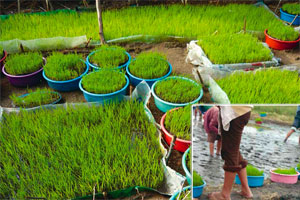
Content Aunque difícilmente se alcanza lo suficiente para satisfacer la demanda nacional, la producción de arroz en el Perú es alta, lo que refleja un sistema de producción aparentemente eficiente. Trabajando en conjunto con otros agricultores, y no siempre con el sistema nacional de investigación y extensión, las iniciativas de los agricultores están demostrando que una manera mucho más eficiente de producir arroz posible.
Author ILEIA
Contributor AgriCultures Network, ILEIA
Type of Initiative Case Studies
Country PERU
Link https://www.agriculturesnetwork.org/magazines/latin-america/el-sica/loco-de-ninguna-manera

Read More

Learning routes: Experiences in Marocco and Egypt

Content

In 2013, two learning routes took place on the themes of farmer organisations in Morocco and water management in Egypt.

ILEIA joined both Learning Routes, carrying out preparatory analysis of the main lessons in the host countries, and documenting how and what the participants (ruteros) learned during the actual route.

The final outcome of these Learning Routes is a 32 page booklet. This booklet presents the main lessons learnt during the two Learning Routes. It first provides short summaries of the initiatives that were visited in Morocco and Egypt.

Next, the main lessons that ruteros identified during the two routes are presented. The final chapter focuses on the lessons drawn from the process of the Learning Route, showing the ways in which knowledge building using this method can be innovative.

Author Laura Eggens, Mireille Vermeulen
Contributor AgriCultures Network, ILEIA
Type of Initiative Report
Country EGYPT, MOROCCO
Link https://www.agriculturesnetwork.org/resources/pubs/2013-learning-routes

Read More

Learning for rural change: 18 stories from Sudan

Content A great variety of rural development initiatives are taking place in the Republic of Sudan. In this book, the outcome of a documentation and communication training in Khartoum in 2013, practitioners describe and analyse some of the most promising experiences.

The articles provide lessons and challenges relevant for professionals in the field of agriculture and rural development. The book is divided into four themes: water management & crop production, livestock, women empowerment and approaches to sharing knowledge. The hope is that this book serves as a source of inspiration for future initiatives.

Author Janneke Bruil, Laura Eggens, Leonardo van den Berg
Contributor AgriCultures Network, ILEIA
Type of Initiative Case Studies
Country SUDAN
Link https://www.agriculturesnetwork.org/resources/pubs/learning-for-rural-change

Read More

Measuring farmer’s agroecological resistance in the wake of Hurricane Mitch

Content This study, published in 2001 by IIED, is the outcome of a participatory action research carried out in cooperation with the Campesino a Campesino, a farmer-led sustainable agriculture movement in Latin America. It compares the sustainability of conventional to agroecological farms after Hurricane Mitch, covering  360 communities of smallholders from southern Nicaragua to eastern Guatemala.

Author Eric Holt-Gimenez
Contributor IIED
Year Published 2001
Type of Initiative Case Studies
Country Guatemala, Nicaragua
Link https://tinyurl.com/dx7jy2h

Read More

From gray to green : replanting hope in Africa’s highlands

Content In Uganda’s Kabale district, too many people had been trying to make a living from too little land. Because of overpopulation and exhaustion of the soil by intense cultivation, the area had gone into decline. Then, researchers and farmers — supported by the International Development Research Centre — joined forces to revitalize the region.
See: https://hdl.handle.net/10625/34762
Author IDRC
Contributor IDRC International Development Research Center
Year Published 2006
Type of Initiative Case Studies
Country ETHIOPIA, KENYA, MADAGASCAR, TANZANIA, UGANDA
Link https://idl-bnc.idrc.ca/dspace/bitstream/10625/34762/1/126857.pdf

Read More

Learning in the field : Isang Bagsak helps people chart their own future

Content A new form of peer learning, developed jointly by researchers and development practitioners in Africa and Asia, uses face-to-face meetings, field practice, and Internet links to learn from each other about participatory approaches to research in natural resource management. Available also in French and Arabic.
Author IDRC
Contributor IDRC International Development Research Center
Year Published 2006
Type of Initiative Case Studies
Country CAMBODIA, VIET NAM
Country UGANDA
Link https://idl-bnc.idrc.ca/dspace/bitstream/10625/34218/1/126867.pdf

Read More

The Rwenzori Experience

Content Environment and Development Series No. 15.
This booklet is a portrait of a unique participatory learning project involving farming communities in the Rwenzori region of Western Uganda. The project brought rural households together in ‘Farmer Family Learning Groups’ (FFLGs) with the aim of enhancing community food security.
This booklet looks at the guiding principles behind the project, how it has worked in practice, the successes achieved and the challenges faced.
Author Aage Dissing and Inge Lis Dissing, By Mette Vaarst, Jane Nalunga, Thaddeo Tibasiima
Contributor Third World Network
Year Published 2012
Type of Initiative Case Studies
Country UGANDA
Link https://www.twnside.org.sg/title/end/pdf/end15.pdf

Read More

Agricultura Familiar Agroecológica Campesina en la Comunidad Andina

Content Las experiencias de producción familiar agroecológica en diferentes regiones del mundo han evidenciado que es una opción viable para promover la seguridad alimentaria y, al mismo tiempo, conservar la biodiversidad de nuestros países. En los países andinos, los pequeños productores junto con los
movimientos agroecológicos han cumplido un rol importante para la promoción y sostenimiento de este tipo de iniciativas, como una propuesta con potencial para atender la precaria situación prevaleciente en el campo. Con el propósito de difundir estas iniciativas agroecológicas en la Comunidad Andina, los gobiernos nacionales, junto con la Secretaría General de la CAN, ejecutaron el Proyecto “Promoción de la Agricultura Familiar Agroecológica Campesina en la Comunidad Andina”.  La presente publicación presenta un resumen de los principales resultados de este trabajo.
Author Secretaría General de la Comunidad Andina
Contributor Comunidad Andina
Year Published 2011
Type of Initiative Case Studies
Country BOLIVIA, COLOMBIA, ECUADOR, PERU
Link https://www.comunidadandina.org/public/revista_agroecologia.pdf

Read More

Whose “clean” development? Communities Speak Out

Content Three case studies from India, Philippines and Thailand on Clean Development Mechanism:

Our analysis, and that of many communities and organisations across Asia, is that the CDM is an extension of the generalised approach to big project and energy intensive development that has systematically marginalised indigenous peoples and local communities and over- exploited the Earth. The “clean development mechanism” is, quite simply, a mechanism that allows polluters to avoid binding emissions reductions in one location, while shifting emissions to another location. At the same time, it allows corporations and state entities to reap additional profits from projects that are questionable in terms of sustainability, community benefits or even addressing climate change.

Author Focus on the Global South
Contributor Focus on the Global South
Year Published 2012
Type of Initiative Case Studies
Country INDIA, PHILIPPINES, THAILAND
Link https://www.focusweb.org/content/whose-%E2%80%9Cclean%E2%80%9D-development-communities-speak-out

Read More