


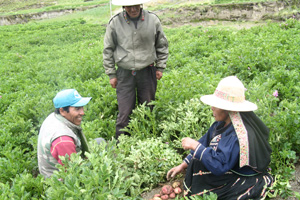
How Yapuchiris build climate resilience
Content Dealing with the uncertainties of changing climates is a challenge faced by farmers around the world. Near Cochabamba in Bolivia’s Andean high plateau, a group of agroecological farmers are leading the way by developing and sharing innovative practices that help their communities break out of the vicious cycle of increased poverty and vulnerability. But challenges remain… Author Luis Carlos Aguilar, Tania Ricaldi Arévalo Contributor ILEIA Year Published 2014 Type of Initiative Case Studies Country BOLIVIA Link https://www.agriculturesnetwork.org/magazines/global/resilience-faces/yapuchiris 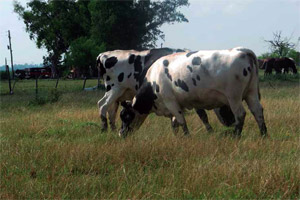
Ser tambero familiar y cuidador del pastizal en las cercanías de la ciudad
Content En los últimos años los servicios intangibles que brindan los pastizales de Sudamérica tomaron importancia, principalmente los rioplatenses de la Argentina, Uruguay, Paraguay y sur de Brasil. Los pastizales rioplatenses de la Argentina pertenecen en parte a la subregión conocida como Pampa Deprimida. Una porción importante de este paisaje ha sido fuertemente afectada por el proceso de agriculturización. Paradójicamente, en la región argentina existen áreas ubicadas en los alrededores de los grandes cascos urbanos que aún conservan superficies importantes de tierras cubiertas por pastizales naturales manejados por pequeños productores familiares. Author Anahí Musso, Bárbara Heguy, Lorena Mendicino, María C. Vecchio, María Isabel Lissarague Contributor Leisa-America Latina Year Published 2014 Type of Initiative Case Studies Country ARGENTINA Link https://www.agriculturesnetwork.org/magazines/latin-america/biodiversidad/ser-tambero-familiar 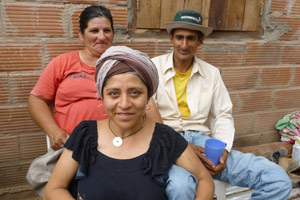
“We are a political and economic force”
Content About 23 years ago, in Santiago del Estero, a province in the north of Argentina, the Peasant Movement of Santiago del Estero Via Campesina (MOCASE -VC) was established. One of its leaders is Deo Sumaj, an impressive peasant woman of the Vilela indigenous people. “Peasant family farming could provide many answers to the crises that humanity faces.” Author Teresa Gianella Contributor AgriCultures Network Year Published 2013 Type of Initiative Interview Country ARGENTINA Link https://www.agriculturesnetwork.org/magazines/global/family-farming/interview-deo-sumaj 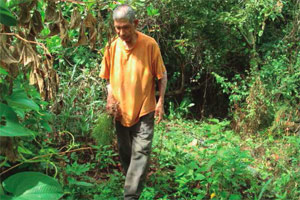
Una iniciativa institucional para preservar la biodiversidad
Content El Centro de Resguardo es un espacio donde se establecen y reproducen plantas medicinales y aromáticas, asociándose especies silvestres y cultivadas, y donde además se registran los conocimientos populares sobre sus usos. Author Olga Monagas, Tulio Carmona, Yony Carmona Contributor Leisa-America Latina Year Published 2014 Type of Initiative Article Country VENEZUELA Link https://www.agriculturesnetwork.org/magazines/latin-america/biodiversidad/iniciativa-institucional-preservar-biodiversidad 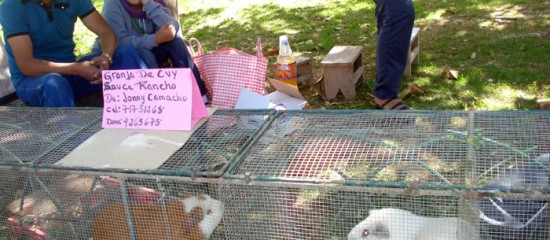
Guinea pigs – small livestock with big potential
Content The right to food sovereignty is a part of the Plurinational State of Bolivia’s constitution, but what does this actually mean for family farmers? The truth is that many people in rural areas are far from having access to adequate food and nutrition, with 37% of children under five reported to be suffering from stunting caused by malnutrition. Amongst the institutions and initiatives that aim to improve food security and sovereignty, the cuy (or guinea pig) project stands out for the inroads it has made towards improving food and nutrition at the family level. Author Contributor Type of Initiative Case Studies Country BOLIVIA Link https://www.agriculturesnetwork.org/magazines/global/reclaiming-nutrition/guinea-pigs 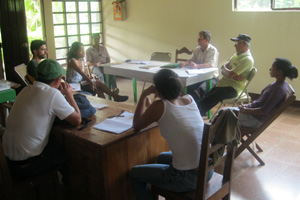
Peasant to peasant: The social movement form of agroecology
Content After the electoral defeat of the Sandinistas in 1990, former land owners returned to Nicaragua from the USA. They began to take back their former estates through legal and less than legal manoeuvering, driving many rural people off the land they had been cultivating. This ‘agrarian counter-reform’ as it became known, left many hundreds of people landless in its wake during the 1990s and early 2000s. Now a national union has adopted agroecology and is leading the way for peasant farmers to collectively work their way out of poverty and towards a more resilient model of agriculture. Author Nils McCune Contributor ILEIA Year Published 2014 Country Nicaragua Link https://www.agriculturesnetwork.org/magazines/global/resilience-faces/peasant-to-peasant 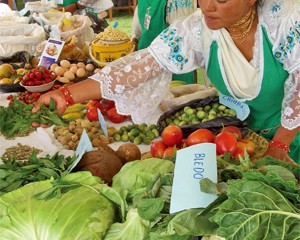
Linking family nutrition in city and country
Content Ecuador is going through a substantial nutritional transition. This, coupled with the paradox that rural families that produce food are often those most affected by undernutrition, shows the ironies of ‘modern’ food systems. It also highlights the importance of rural-urban linkages around family nutrition which can help to address such contradictions. This is what we see among families living in two rural villages, San Francisco Alto and Ambuqui, in the north of Ecuador, who through various strategies have managed to achieve healthy, diversified and nutritious diets. Author Carla Guerrón-Montero, Myriam Paredes Contributor ILEIA Year Published 2014 Type of Initiative Case Studies Country ECUADOR Link https://www.agriculturesnetwork.org/magazines/global/reclaiming-nutrition/from-farms-to-towns 
Climate Resilience Sustainable Agriculture Experiences
Content This document summarises case studies from ten countries through ActionAid’s approach to climate resilient sustainable agriculture, which incorporates agroecology in a human rights framework. Based on these experiences ActionAid recommends to increase investment in agroecology, as part of a comprehensive human rights based approach: - In particular in ensuring public agriculture research works with nature, taking cognisance of the natural ecological functioning;
- That public agriculture scientists are encouraged to work with farmers to define their research priorities, disaggregating the priorities of male and female farmers;
- That extension agents are trained on sustainable agronomic practices and farm management, which can have significant benefits in terms of building resilience, adapting to climate change, and improving production and food security;
- Of course, all this needs to be underpinned by support for smallholder farmers’ organisations, including women farmers’ unions, to both engage effectively with markets and with government to influence public policy in their favour.
Author Contributor ActionAid Year Published 2014 Type of Initiative Case Studies Country AFGHANISTAN, BANGLADESH, CAMBODIA, CHINA, MYANMAR, NEPAL Country MOZAMBIQUE, RWANDA Country BRAZIL, Nicaragua Link https://ag-transition.org/wp-content/pdf/2014-CRSA_Experiences-September_2014_SMALL.compressed.pdf 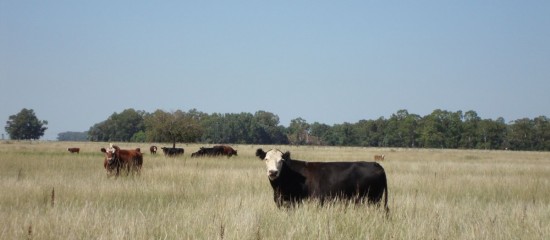
La Aurora, un caso de agroecología aplicada
Content Publicación acerca de la experiencia agroecológica implementada en el establecimiento La Aurora, unbicado en Benito Juárez, provincia de Buenos Aires, Argentina Author Miguel Viñuales Contributor Miguel Viñuales Year Published 2013 Type of Initiative Case Studies Country ARGENTINA Link https://www.elpopular.com.ar/eimpresa/167172/el-equilibrio-entre-ser-productivo-y-sustentable 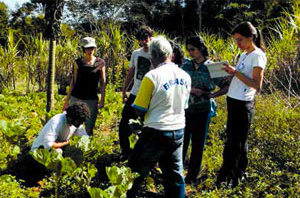
Rede Raízes da Mata: Strengthening links between producers and consumers
Content As in many other parts of the world, farmers in the Zona da Mata region, in the Brazilian state of Minas Gerais, were encouraged to take up the Green Revolution package. This model also prescribed integration with the international markets. Family farmers, however, have found that this model has not brought the promised benefits. Many different efforts have led to viable alternatives. One of these is Rede Raízes da Mata (or the “Forest Roots Network”), started in 2011 as a joint initiative by a group of university students and local producers. The main goal of the network is to improve the commercialisation of local agro-ecological produce by establishing stronger links between producers and consumers. Author Fabricio Vassalli Zanelli, Heitor Mancini Teixeira, Irene Maria Cardoso, Nina Abigail Caligiorne Cruz Contributor AgriCultures Network, ILEIA Year Published 2013 Type of Initiative Case Studies Country BRAZIL Link https://www.agriculturesnetwork.org/magazines/global/markets/rede-raizes-da-mata
South America
Initiatives by Region


Other Websites
 150 organizations have signed on to the document Rio+20 Time to act. See the list of organizations which have signed on to it, at www.timetoactrio20.org 150 organizations have signed on to the document Rio+20 Time to act. See the list of organizations which have signed on to it, at www.timetoactrio20.org |
|
|
 Agriculture at a crossroads. Findings & recommendations for future farming. You may visit the website at www.globalagriculture.org Agriculture at a crossroads. Findings & recommendations for future farming. You may visit the website at www.globalagriculture.org |
Many thanks to:




Except where otherwise noted, content on this site is licensed under a Creative Commons Attribution 3.0 License.